

Portuguese Words to Know: European Portuguese Texting Edition

After you start learning Portuguese, you will notice a huge difference between formal and casual settings. This gap becomes even more obvious in written communication. There is a world of difference between a formal letter in Portuguese and a text to a friend.
But sooner or later you will want to text in European Portuguese. You will want to reach out to a friend, neighbour, or family member. Maybe you will need to confirm a meeting with a colleague or a doctor’s appointment. How can you do that in a way that feels natural to a native? Or if you receive a text from someone else, how can you understand what they wrote?
Texting in Portuguese has a few nuances worth knowing. Depending on the level of formality you are aiming at, you can even use slang words and abbreviations. But it is crutial that whatever you write fits the relationship, the topic, and the moment.
In this essential guide, explore all about European Portuguese texting. Understand basic portuguese phrases you can use, but also dig deeper into native-only terms.
Common European Portuguese Texting Abbreviations Explained
To get started, explore ten common European Portuguese texting abbreviations. The table below features the Portuguese meaning and English translation for each abbreviation.
| Abbreviation | Full Portuguese word | English translation |
| bj or bjs | beijo or beijos | kiss or kisses |
| cmg | comigo | with me |
| obg | obrigado or obrigada | thank you |
| pf | por favor | please |
| pq | porque or porquê | because or why |
| q | que | that |
| qualquer | any (anything, anytime, anyone, etc.) | |
| tbm | também | also or too |
| td bem | tudo bem | everything okay? or okay |
| vdd | verdade | true |
You probably noticed some patterns just by looking at these abbreviations. Before learning more, explore some basic phrases for everyday messages.
Basic Portuguese Phrases for Everyday Messages
If you are learning to speak Portuguese, you probably understand how important it is to explore reading and writing as well. The ability to understand everyday communication is more than an advantage; it is a real-world necessity.
So, whether you want to start a business conversation, send a funny meme to your friend, or say goodnight to your aunt, you can use these essential phrases.

In The Journey, we teach you all you need to know about communicating in real life. This European Portuguese program takes you on an adventure throughout Portugal, immersing you in the local culture and language. Plus, you can start for free, with no commitment and no credit card required. Learn more HERE!
Starting a Conversation
The best way to start a conversation, regardless of how you are communicating, is with a greeting. You can learn more about this topic in our article: Nice to Meet You in Portuguese: The Beginner’s Guide to Introductions.
Greetings in European Portuguese: Bom Dia, Boa Tarde, and Boa Noite
The Portuguese language has four basic greetings. They are:
- Olá (Hello), which you can use at any time of the day
- Bom dia (Good morning), used during most of the day
- Boa tarde (Good afternoon), used only in the afternoon
- Boa noite (Good evening or good night), used after it gets dark
These are basic ways of greeting people regardless of the relationship you might have with them or the context you are in.
Asking How Someone Is
Even when texting, Portuguese culture relies heavily on politeness. So, after greeting people, you will want to know about them. How are they doing? Are they having a good day? How is their family? For this, you can use short questions like:
- Como estás? (How are you? – informal)
- Como está? (How are you? – formal)
- Como vai? (How are you? – formal)
- Tudo bem? (Everything okay? / How are things?)
You can also write longer sentences, such as:
- Como está a correr o teu dia? (How is your day going?)
- Espero que a tua semana esteja a correr bem! (I hope your week is going well!)
- Como está a tua família? (How is your family?)
If they ask how you are, you can answer:
- Eu estou bem. (I am fine.)
- Eu não estou muito bem. (I am not feeling very well.)
A very common Portuguese expression is Vai-se andando or Cá se vai, which translates to “I’m getting by.”
Making Plans and Arrangements
The content of the conversation might be the most challenging aspect for you as a learner. But there are a few sentences you can keep at hand when setting up plans. You can use these questions to get more detailed information and easily navigate making plans with your native friends. For example:
- Onde fica? (Where is it?)
- Quanto custa? (How much does it cost?)
- Em que dia? (On what day?)
- A que horas? (At what time?)
- Qual é a atividade? (What is the activity?)
- Temos de reservar? (Do we need to book?)
- Qual é o ponto de encontro? (What is the meeting point?)
Saying Thank You and Goodbye
To wrap up your message, you can say a simple Obrigada or Obrigado (Thank you). In fact, doing so is your best option for formal messages. But what if you want to add a goodbye?
Goodbyes in texting can be very different from regular ones. First, if you are in a conversation through text, you will not include a goodbye in every message. Second, you might be waiting for information you will need to share or their confirmation. Maybe you will see each other the same day. So, your top three options to say goodbye are:
- Até já (See you soon)
- Até logo (See you later)
- Beijinhos (Little kisses / Lots of love)
Discover more about goodbyes in European Portuguese in our video: 10 Ways to Say Bye in European Portuguese.

Common Portuguese Slang Words and Expressions
Texting is usually one of the most informal ways to communicate. Naturally, it often also features slang words and expressions. As a learner, this is an opportunity for you to extend your vocabulary and improve understanding through context.
After all, most of these expressions do not have a direct translation into English or other languages. Plus, if you have been learning European Portuguese long enough, you will know that real-life communication includes lots of slang. Here are ten common expressions you can also apply in text messaging:
- fixe – this word means cool or awesome. It defines something or someone you find impressive.
- pá – translates to Man or Dude.
- epá – an exclamation similar to wow or oh. It expresses surprise, emphasis, or mild frustration.
- bué – means a lot or very. It intensifies an adjective or denotes a large quantity.
- gajo or gaja – very informal term for guy or girl.
- basar – to say you are heading out or leaving a place.
- brutal – means awesome. Describes something great or impressive.
- guito – slang for money, especially physical cash.
- cena – used to refer to any object, situation, or topic.
- tipo – one of the most popular European Portuguese filler words among young people.
You can learn more about slang in European Portuguese in these articles:
A Portuguese Texting Dictionary: 45 Abbreviations to Know
Now that you know more about Portuguese texting culture, here is a full dictionary you can use in everyday SMS. Include these terms, especially when texting friends and family.
| Abbreviation | Full Portuguese word | English translation |
|---|---|---|
| abçs | abraços | hugs |
| ajd | ajuda | help |
| algm | alguém | someone |
| amg | amigo/a | friend |
| até lg | até logo | see you later |
| bdia | bom dia | good morning |
| btrd | boa tarde | good afternoon |
| cm | com | with |
| cmd | comida | food |
| cm licnç | com licença | excuse me |
| dps | depois | later / afterwards |
| dsclp | desculpa | sorry / excuse me |
| ft | foto | photo |
| fzr | fazer | to do / to make |
| gnt | gente | people / guys |
| gj | gajo or gaja | guy or girl |
| hj | hoje | today |
| hrs | horas | hours |
| k | que or ok | that / okay |
| mç | moço | young man / lad |
| mds | meu Deus | my God |
| mins | minutos | minutes |
| mlhr | melhor | better / best |
| mm | mesmo | really / indeed |
| msg | mensagem | message |
| mt | muito | very / a lot |
| n | não | no |
| nd | nada | nothing |
| net | internet | internet |
| ngm | ninguém | nobody / no one |
| oq | o quê | what |
| pra | para | to / for |
| prjt | projeto | project |
| qt | quanto | how much / how many |
| sdds | saudades | missing someone / longing |
| sff | se faz favor | please |
| sm | sem | without |
| ta | está | is / it is |
| tlm | telemóvel | mobile phone |
| tnh | tenho | I have |
| to | estou | I am |
| trblh | trabalho | work |
| vms | vamos | let’s go / we are going |
| xau | chau | bye |
| ya | sim | yes |
Formal Portuguese Abbreviations
What about formal texting? Surprisingly, using abbreviations is common even when you are texting in a more formal tone. In fact, some abbreviations have become more common than the words they represent. Here are some examples:
- Dr. / Dra. – Doutor / Doutora (Doctor)
- Sr. / Sra. – Senhor / Senhora (Mr. / Mrs. / Ms.)
- Av. – Avenida (Avenue)
- Pág. – Página (Page)
- Prof. – Professor / Professora (Professor / Teacher)
- Obs. – Observação (Note / Observation)
- Art. – Artigo (Article)
- Cód. – Código (Code)
- Nt. – Nota (Note)
- CM – Câmara Municipal (Municipal Council / City Hall)
If you think about it, it is not much different from what you will find in the English language. Standard business acronyms and professional abbreviations are also acceptable in some cases. You might think, for example, of abbreviations like ASAP (as soon as possible) or FYI (for your information).
Where Did Portuguese Texting Abbreviations Come From?
As you know, communication changes with the context, the relationship, and the means used to convey it. Texting specifically has long been among the most informal ways to keep in touch. Popularized since the 90s, most countries developed a particular style of communicating through SMS (Short Message Service).
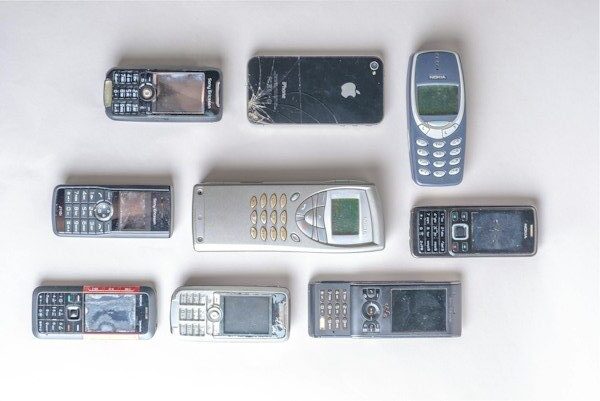
In Portugal, SMSs were introduced in the mid-1990s. They became more popular in the early 2000s, after the release of mobile phone services for the younger generation. But texts had a 160-character limit, and they could quickly become costly. Besides, during this period, cellphones had alphanumeric keypads. Users started using abbreviations to cut down on texting costs and writing time.
Formal vs. Informal Texting in European Portuguese
Even though texting is often an informal type of communication, you might find yourself in situations in which you need to send a more formal text message. For example, you might want to confirm a doctor’s appointment or a restaurant reservation. You might want to text an older acquaintance, a family member you are not very close with, or a work colleague.
In these cases, you must start by assessing the level of formality you want to maintain. Doing so will ensure you remain respectful, but not overly formal. You can split formal and informal texting into three categories:
- friends and family
- colleagues and acquaintances
- professional situations
Texting Friends and Family
Friends and family will receive your most informal messages. You will likely use lots of abbreviations and slang words. These are the kind of people you write to without much thought and maybe also send a bunch of texts in a row.
If you want to practice informal communication, your best friends and closest family members are the perfect audience. They can also help correct you when you write texts that are difficult to understand or use specific expressions the wrong way.
Texting Colleagues and Acquaintances
With colleagues and acquaintances, you get a middle ground. Your texts should be structured, polite, and somewhat well-written. But you can use some abbreviations. In some cases, you can include light slang expressions. Remember that your messages do not need to be perfect.
The trick to nail communication with this group is to maintain the same connection you have in person over text. This way, you can stay true to the relationship you already have. You will not sound too distant, but you will also not seem disrespectful or overly informal.
Texting in Professional Situations
People in this category will likely receive your most formal texts. They are often those to whom you would send a well-structured email signed off with ‘Best regards.’ They include: workmates you are not close with and bosses. They also include professionals you might need to contact from other areas, such as doctors, lawyers, or even real estate agents and plumbers.
The reason for which you are contacting them is inconsequential for the level of formality of the message itself. Instead, what defines the way you write your message is the kind of relationship you currently have.
How to Understand and Translate Portuguese Text Messages into English
There are a few different ways to translate European Portuguese text messages into English.
- Translate them yourself: when you receive a text, try to understand what it says. Look at the words, abbreviations, and try to infer what you don’t understand from the context and the sender.
- Translate with Google: use Google Translate to get an automatic translation. Google also translates most abbreviations. You can also play the message to help with listening and pronunciation. Remember to select the option Portuguese (Portugal) to get the right translation.
- Use AI: use AI to translate the text message, verify your own translation, or write and correct your answer.
We recommend that you try to translate the messages yourself as a first step. This way, the texts you get will become progressively easier to understand. You can even write down what you think the message says. Then ask a friend or use AI or Google to verify your translation. During this stage, take a few minutes to understand any mistakes.
Afterward, write an answer yourself. Once again, ask your friend or use AI to correct it and make sure it is understandable. At Portuguese with Carla & Friends, we stand for reaching out to real humans. Asking for help is also a fantastic way to connect with those around you. But you can use other tools if, for any reason, you do not have a Portuguese speaker nearby or can not connect with one easily.

Common Mistakes When Texting in European Portuguese
As a foreigner learning European Portuguese, you are bound to make mistakes. Please do not quit texting just because of a misunderstanding. Even natives often send the wrong text to the wrong person, use abbreviations poorly, and miss the tone.
When you feel too confused, use a sentence like:
- Eu não entendo. (I do not understand.)
- Podes explicar? (Can you explain?)
- Não falo português. (I do not speak Portuguese.)
- Estou a aprender português. (I am learning Portuguese.)
Take a look at the most common mistakes you should avoid when texting in European Portuguese.
Mixing European and Brazilian Portuguese
Most of the content you will find online focuses on Brazilian Portuguese. So, if your goal is to explore the European variant in depth, you need to filter that information.
Native Portuguese speakers will not understand Brazilian expressions and abbreviations. And because many words have different meanings in both variants, you might unintentionally create misunderstandings. So, avoid expressions like:
- Legal (Cool / Nice)
- Você (You)
- Foi mal (My bad / Sorry)
- Por nada (You are welcome / No problem)
- Beleza (Cool / Okay / All good)
Not Using Any English Words
If you speak English, you might feel tempted to remove all English terms from your texting when your recipient is Portuguese. More than one-fourth of Portuguese people between 15 and 55 years old speak English.
Many of them will understand English words like: “please,” “thanks,” “hello,” and “whatever.” So, especially with younger people, you can easily use abbreviations like: “pls,” “lol,” and “thx.” Doing so might even help your texts flow more smoothly.
Overthinking Texting in Portuguese
Send the text. Do not think about it for a lifetime. Do not try to tweak it one hundred times. You will only learn to text if you actually write and send messages. So after writing the best you can, send it. Get feedback from your natives friends and use it to improve. Ask a native friend to help you if the text is more formal or seems more consequential.
But do not keep yourself from communicating whenever you can. When it comes to connecting with others, no lessons can replace real-life practice. So, please, send the text.
European Portuguese Texting Cheat Sheet
Do you want to nail texting in European Portuguese? We have got you covered. Here are a few tips you can apply to get it right every single time.
- Remove almost all vowels
- Use emojis
- Make use of all the symbols on the keyboard
- Accent marks almost disappear
- Punctuation disappears
- Replace CH with X
- Replace QU with K
- Use the traditional abbreviations for months: Jan, Fev, Mar, …
- Use abbreviations for school subjects too: Port, Fr, Ing, Mat, …
FAQs About Portuguese Words and Texting
What Does “Tu Du Bem” Mean?
“Tu Du bem” does not exist in Portuguese. The correct question is: Tudo bem? It means “How are you?” or “Is everything okay?” in European Portuguese. It can also be used to answer the question by turning it into a statement. In that case, it means “I’m good” or “Everything’s okay.”
In texting, you might see td bem, which is a common abbreviation for the same expression.
What Are Common Portuguese Texting Abbreviations Used in Messaging Apps?
Some common European Portuguese texting abbreviations include obg (obrigado/obrigada, thank you), pf (por favor = please), pq (porque/porquê = because/why), tbm (também = also), and vdd (verdade = true). You will also come across shorter forms such as cmg (comigo = with me), bj or bjs (beijo/beijos = kiss/kisses), and td bem (tudo bem = everything okay).
These abbreviations are especially common when texting friends and family. However, remember that not every abbreviation is appropriate in a formal conversation.
What Are Some Common Slang Terms Used in Portuguese Texting?
European Portuguese texting often includes slang words and expressions you will hear in everyday conversations. Some examples include: fixe (cool), pá (man/dude), epá (an exclamation expressing surprise or frustration), bué (a lot/very), and gajo/gaja (guy/girl).
You might also see bazar (to leave), brutal (awesome), guito (money), cena (thing/situation), and tipo (like). These expressions are informal, so save them for conversations with friends and people you know well.
What Are Some Basic Portuguese Phrases for Texting?
If you are just starting to text in European Portuguese, it helps to have a few everyday phrases ready. You can use Olá (Hello) to start a conversation, followed by Como estás? (How are you?) or Tudo bem? (How are things?).
When making plans, try Onde fica? (Where is it?), Quanto custa? (How much does it cost?), or A que horas? (At what time?). To finish a conversation, you can write Até já (See you soon), Até logo (See you later), or Beijinhos (Lots of love).
Is European Portuguese Texting Different from Brazilian Portuguese?
Yes. Remember that they are two variants of the same language. So you will notice differences, especially in casual conversation, including texting.
Often, expressions that are common in Brazil, such as legal (cool), foi mal (my bad), and beleza (okay), are not typically used in Portugal. You may also notice differences in vocabulary, abbreviations, and everyday expressions.
If your goal is to communicate naturally in Portugal, make sure you are learning the European variant and pay attention to the expressions native speakers actually use.
How Do You Say “Text Me” in European Portuguese?
To say “Text me” in European Portuguese, you can say Manda-me mensagem or Manda mensagem (lit. “Send me a text” or “Send a text”). Both of these sentences are perfect if you are interacting with a friend, family member, or work colleague. If you need to maintain a higher formality level, conjugate the verb in the third person singular, and say Mande-me mensagem.